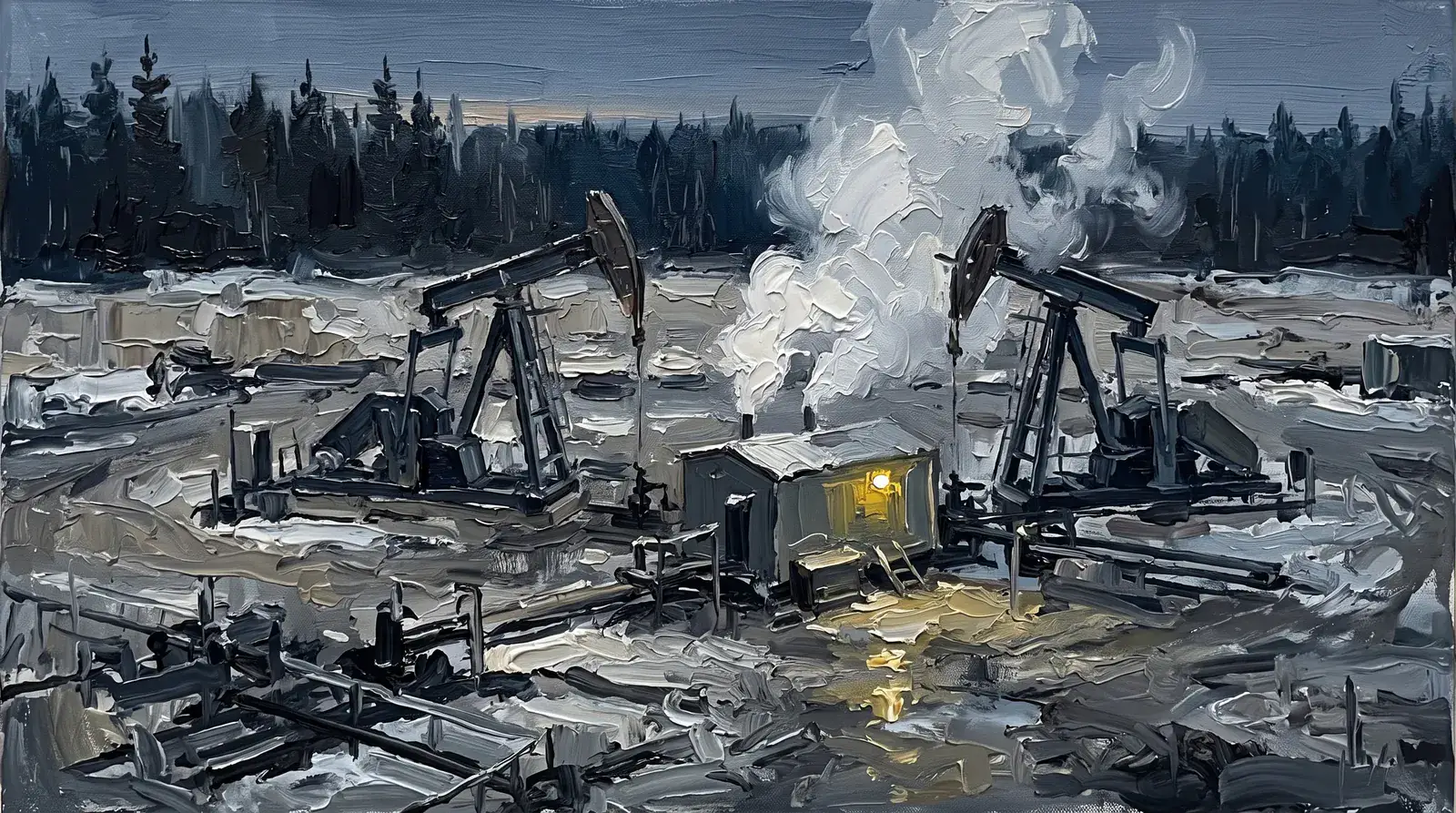
Six wells every operator recognises, run through the SRABS model: where the rods fail, what the stack changes, what it’s worth. The field receipts come next.
AllPermianBakkenHeavy oilGas-lockedMature field
At a glance
0
modelled wells
0
basins
−0%
median rod failures
0 d
to a real one
methodology ↗
S02 / Case grid
Permian · deviated · modelled
The S-curve stripper.
8,200 ft, 14° dogleg, rods parting every 5 months. Tension-only stroke takes compression off the bend.
2.4 → 0.8
rod failures / yr
+0%
oil production
Bakken · high GOR · modelled
The gas-locked pump.
Gas interference stalls fillage below 60%. Echo reads the fluid level, Brain slows the stroke before it pounds.
1.9 → 0.7
rod failures / yr
+0%
oil production
Alberta · heavy oil · modelled
The 900 cP drag.
Viscous drag on the downstroke buckles the bottom string. Anti-buckling pump keeps every rod in tension.
3.1 → 1.1
rod failures / yr
+0%
oil production
Vienna Basin · mature · modelled
The 40-year-old field.
Water cut at 92%, margins at the edge. Fewer pulls turns a shut-in candidate back into cash flow.
1.6 → 0.5
rod failures / yr
+0%
oil production
Midcontinent · pumped off · modelled
The fluid-pound well.
Timer-run, pounding half of every cycle. Continuous fluid level replaces the timer with a real setpoint.
2.0 → 0.6
rod failures / yr
+0%
oil production
Appalachia · orphaned · modelled
The well nobody wanted.
Idle for three years. Low-rate restart only works if the pump can't wreck the string doing it.
n/a → 0.0
rod failures / yr
+0 bbl/d
oil production
Modelled scenarios · SRABS physics + ROI model · the first field receipts start with your well →